.svg)


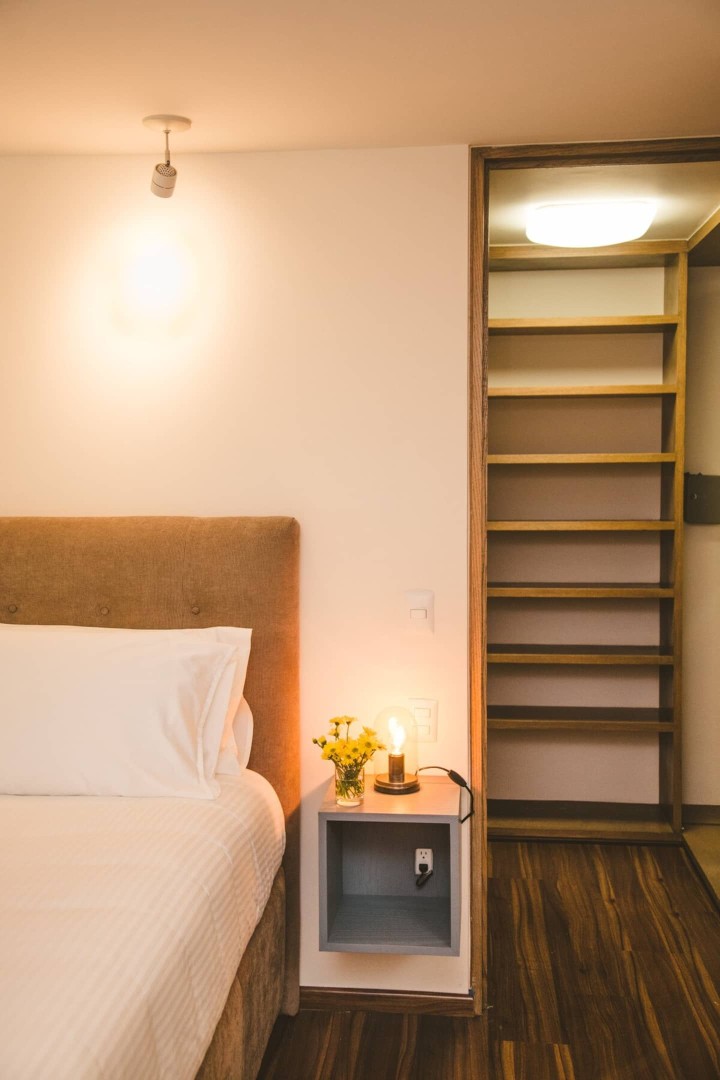

Well-being within a stay does not need to be presented as a medical promise or as a collection of gadgets. In a temporary property, it usually starts with more basic things: sleeping well, having good light, reducing avoidable noise, breathing in a clean space and having a layout that does not create friction.
01
Start with rest and control of the environment
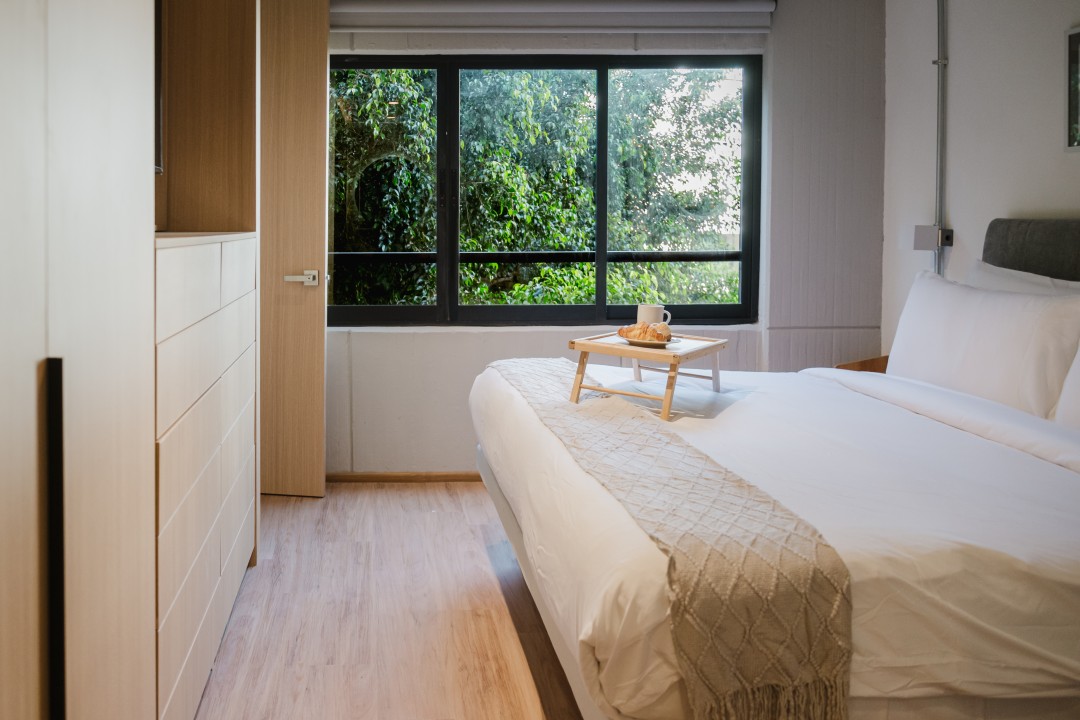
For a guest, being able to sleep well has more impact than a flashy amenity. Curtains that control light, a mattress and pillows in good condition, reasonable temperature and reduction of internal noise are straightforward product decisions.
Not everything depends on the interior. If the street is active, communication should be honest and design can mitigate some noise, but it should not promise absolute silence.
- Enough darkness for sleep.
- Manageable ventilation and temperature.
- Clean textiles in good condition.
- Controlled internal noise.
- Warm, functional lighting by area.

02
Well-being is also ease of use
A confusing kitchen, not enough outlets or a bathroom with nowhere to place objects creates small repeated interruptions. Well-being-oriented design also means the space can be understood without endless instructions.
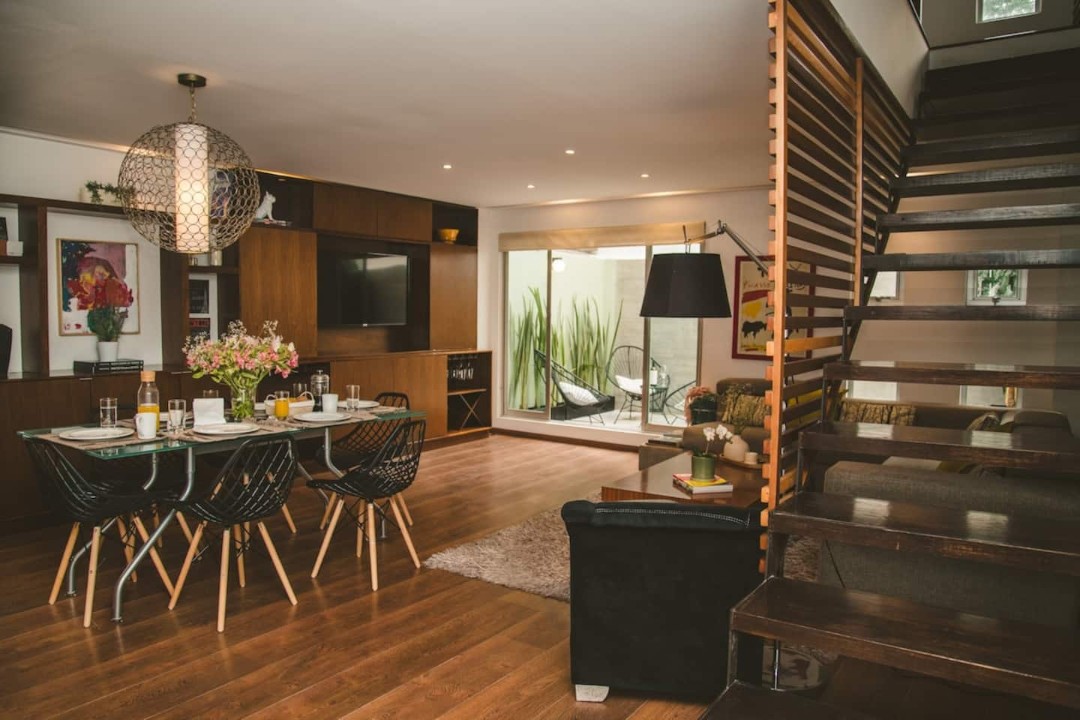
Visual order, storage and circulation help especially on stays of several weeks, when the guest stops living out of a suitcase and begins using the apartment as a temporary home.
| Element | It helps when… | It avoids when… |
|---|---|---|
| Lighting | It supports reading, working and relaxing | Guests have to rely on one harsh light |
| Storage | There is space for luggage and clothing | Guests live with open suitcases |
| Acoustics | It reduces avoidable internal noise | Doors and equipment create disturbance |
| Materials | They feel good and are easy to maintain | The aesthetic depends on fragile surfaces |
| Plants | They make sense within the maintenance routine | They become another neglected element |
03
Do not turn trends into claims
Terms such as biophilia, circadian rhythm or air quality can inspire design ideas, but they should not automatically become health claims. If you install filters, special lighting or specific technology, communicate what the equipment does, not medical outcomes you cannot guarantee.
For a hospitality property, the most defensible standard is functional: appropriate light, cleanliness, ventilation, comfort and maintenance.
Well-being can be a design direction. It does not need to be presented as clinical evidence or used by itself to justify a higher rate.
04
Which improvements usually deserve priority
Before buying a new device, check whether you have already solved sleep, lighting, workspace, bathroom, kitchen and maintenance. Those decisions affect almost every guest and are easier to sustain operationally.
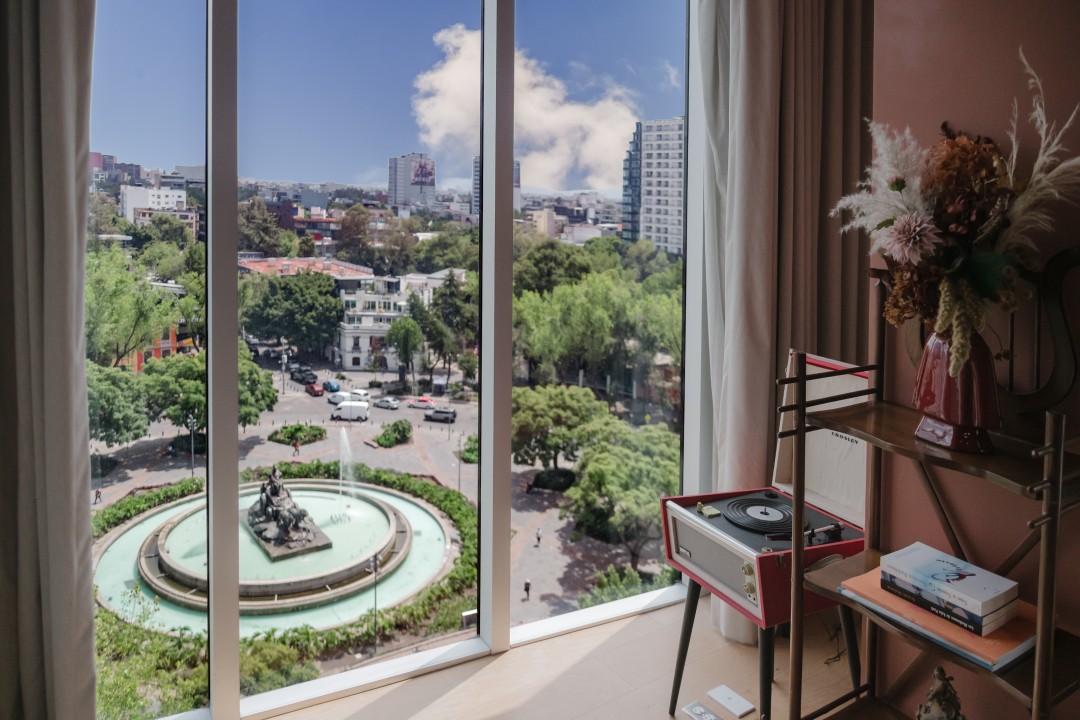
After that, any additional element should respond to the property profile. A stay next to a park can take advantage of that relationship; an executive property may need more attention to acoustics and work setup.
- Solve universal needs first.
- Choose improvements compatible with the guest profile.
- Avoid objects the team cannot maintain.
- Communicate features without promising health outcomes.
- Check whether the improvement still works after several stays.
Well-being can also improve operations for the team
A more orderly space, with maintainable materials and intuitive controls, does not only benefit the guest. It makes cleaning, inspection and replacement easier. When an improvement creates too much complexity for the team, it can end up deteriorating or being used incorrectly.
For example, a sophisticated lighting system loses value if no one knows how to configure it or the guest needs a long manual. In hospitality, ease of use is part of design. Ideally, decisions should feel nearly self-explanatory.
What to measure after adding a well-being improvement
Look for evidence related to the function: fewer comments about noise after an acoustic intervention, better perception of sleep after replacing mattresses or fewer questions about lighting after simplifying controls. Avoid turning weak correlations into health or profitability claims.
The usefulness of an improvement can be qualitative: guests use the space better, the team maintains it with less friction and the property's proposition is easier to understand. That is enough to evaluate whether the decision should remain.
Frequently asked questions
Do I need to buy air purifiers or special technology?
Not by default. Evaluate ventilation, cleaning, noise, lighting, sleep and ease of use first. Technology can complement a specific need, but it does not replace the fundamentals and should not be purchased only to use the wellness label.
Do plants automatically improve air quality?
It is better not to present indoor plants as a health guarantee. They can add a visual connection with nature, but they also require maintenance. Include them if they fit the space and the team can care for them.
Can I charge more for a wellness property?
You cannot assume a specific premium. Pricing depends on the market, property, dates and demand. Improvements should first be justified by experience and product coherence, not by a promised percentage.

.svg)