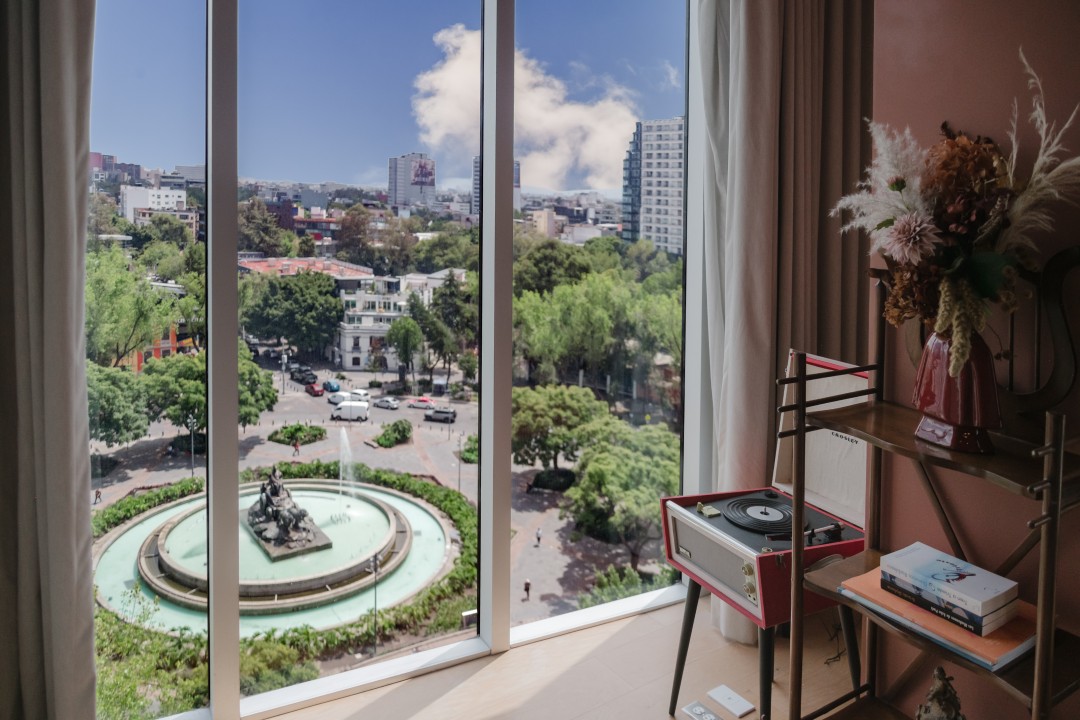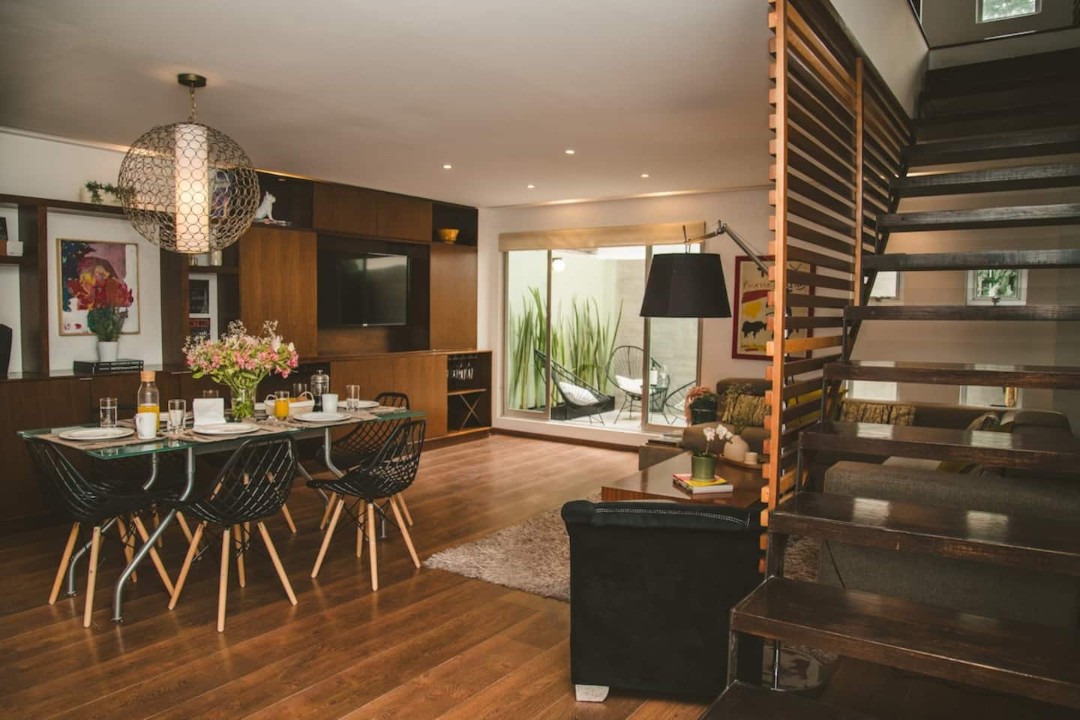

Talking about real estate profitability in Roma Norte without knowing the property, its costs, availability, condition and commercial strategy produces misleading figures. There is no universal percentage that represents every property in the neighborhood; profitability is the result of several interacting decisions.
01
Why location does not guarantee the result
Roma Norte has demand and recognition, but two apartments a few streets apart can behave differently because of layout, noise, building, light, elevator, number of bedrooms or physical condition.
Location creates an opportunity; the property and its operations determine how well you can use it. Buying or managing based only on the neighborhood name oversimplifies the decision.
- Micro-area and immediate surroundings.
- Layout and comfortable capacity.
- Condition of the building and apartment.
- Fixed and variable costs.
- The guest profile the property actually serves.
- Annual availability and the owner's personal use.

02
Occupancy and rate need to be read together
High occupancy is not automatically better if it requires constantly lowering price or increases turnover costs. Nor is there much value in chasing a very high rate if it leaves too many nights empty. The strategy needs balance.
In a boutique model, the objective is to present and operate the asset well enough to compete on value, rather than turning it into a commodity whose only argument is price.
| Metric | What it answers | What it cannot answer alone |
|---|---|---|
| Occupancy | How many nights are booked | Whether each booking is profitable |
| Average rate | Average price sold | Costs and empty nights |
| Gross income | Revenue generated | Operating expenses |
| Operating cost | What it costs to function | Value of the owner's time/capital |
| Net result | What remains after costs | Future appreciation of the property |
03
Protecting the asset is part of profitability
Deferring maintenance can improve one month's result and worsen the year's. A poorly maintained property loses consistency, creates incidents and may require more expensive interventions later.
That is why profitability management should not be separated from maintenance and inventory. The owner needs to understand both what is generated and what investment is required to preserve the product.
To go deeper on this point, read proactive maintenance.
04
How to compare a boutique model with a volume model
Do not use labels as if they were metrics. Ask what really changes: how many properties each person supervises, how cleaning is controlled, who makes pricing decisions, how incidents are handled and what information the owner receives.
A boutique model may fit owners who value greater attention and care; a volume model may prioritize standardization and scale. The choice depends on what you expect from operations and the type of asset.
- Compare service scope.
- Ask for clarity on included and external costs.
- Review how maintenance decisions are made.
- Ask who physically supervises the property.
- Evaluate reporting and the owner's decision-making ability.
What data you need for a serious projection
A useful estimate should start with the specific property: available calendar, building costs, condition, capacity, history if available and operating strategy. Then compare the market, but without treating a rate seen on another listing as guaranteed income.
Work with scenarios. A conservative case, a base case and a more favorable case make it possible to see how sensitive the result is to occupancy, rate and costs. If the investment only works in the most optimistic scenario, that is more valuable information than an attractive percentage.
Profitability and appreciation are different questions
Rental operations answer a cash-flow question: what the property generates and what it costs to operate. Appreciation refers to how the asset's value changes over time and depends on different variables. Mixing them can make a poor operation look acceptable because “the neighborhood is going up,” or cause a long-term asset to be judged only by one month of bookings.
Define what you expect from the asset. If the primary objective is cash flow, measure operations with discipline. If you also want long-term appreciation, evaluate it separately with real estate information and appropriate advice.

Frequently asked questions
Is there a “normal” profitability percentage for Roma Norte?
There is no universal figure that should be applied to every property. The result depends on acquisition, costs, availability, property and operations. Use asset-level data and scenarios, not a generic neighborhood percentage.
Does high occupancy mean the strategy is working?
Not necessarily. If it is achieved with rates that are too low, high costs or more wear, the net result may not be attractive. Read occupancy together with rate, costs and maintenance.
What information do I need before hiring management?
History if available, property costs, objectives, availability for personal use and physical condition. The operator should review the property before making serious projections.